Monoline Middle Eastern Vector Set: Graphics & Illustrations
When I first opened the files for the Monoline Middle Eastern Vector Set, I was immediately struck by its restraint. In a market saturated with overly complex, multi-colored clipart that often clashes with modern branding trends, this collection offers a refreshing sense of calm and precision. As a brand designer who frequently consults for local businesses, from artisanal coffee roasters to boutique skincare lines, I am always on the lookout for graphic design assets that bridge the gap between cultural authenticity and contemporary minimalism. This set does exactly that.
The mood it creates is distinctly elegant yet approachable. It does not scream for attention; rather, it invites the viewer in with clean, continuous lines. For a small business owner, this suggests a brand personality that is confident, refined, and deeply rooted in tradition without feeling dated. It feels premium, organic, and handmade, making it an ideal choice for brands that want to convey quality and care through their visual identity.
Elevating Local Brand Identity Through Cultural Nuance
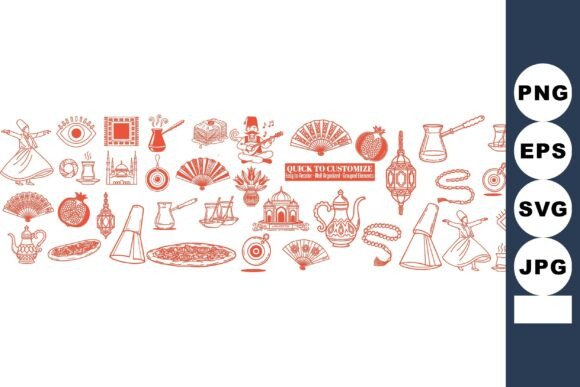
I recently utilized elements from this collection while developing a visual identity for a local specialty tea and confectionery shop. The client wanted to highlight their Turkish heritage but feared that traditional motifs might look too touristy or cluttered on their packaging. The Monoline Middle Eastern Vector Set provided the perfect solution. By isolating specific illustrations—such as the intricate teapots and delicate Turkish coffee cups—we were able to create a logo mark that felt both iconic and sophisticated.
This experience highlighted how versatile these graphics can be for real-world applications. Beyond logo design, we extended the visual language to product labels and hang tags. The single-color nature of the vector set allowed us to print directly onto kraft paper boxes, reducing production costs while maintaining a high-end aesthetic. For any handmade business or local brand, this adaptability is crucial. It means you are not locked into one color scheme; instead, you can adjust the line art to match your seasonal campaigns or specific product lines.
Practical Applications for Packaging and Promotional Materials
The true value of a graphic design asset lies in its usability across various touchpoints. Here is how I recommend integrating these illustrations into your small business branding strategy:
- Product Packaging: Use the lanterns or pomegranates as repeating patterns on wrapping paper or as focal points on box lids. The clean lines ensure they remain legible even when scaled down for smaller items like soap bars or candle jars.
- Social Media Graphics: These vectors are perfect for creating cohesive Instagram stories or posts during festive seasons. They provide a decorative frame for text without overwhelming the message, improving visual hierarchy.
- Printable Design Elements: Incorporate the whirling dervishes or decorative fans into thank-you cards and inserts. This adds a personal, tactile element to the unboxing experience, fostering a stronger emotional connection with customers.
- Menu and Price Lists: For cafes or restaurants, these illustrations can serve as section dividers or bullet points, adding character to otherwise plain textual layouts.
When used in marketing visuals, such as flyers or posters, the monoline style ensures that the design remains clean and professional. It avoids the "clipart" look that can sometimes undermine customer trust. Instead, it signals that the brand pays attention to detail, which translates to perceived product quality.
Strategic Placement and Design Caution
While the Monoline Middle Eastern Vector Set is incredibly versatile, it is not a one-size-fits-all solution. Understanding where to place these graphics is key to effective professional branding. They work best as hero graphics on minimalist packaging, as subtle accents on business cards, or as decorative borders on website banners. The simplicity of the SVG design allows for easy editing, meaning you can adjust stroke weights to better suit your specific medium.
However, there are scenarios where caution is advised. Avoid using these detailed illustrations on very small labels where ingredient lists or legal information must take precedence. In crowded product packaging, the fine lines may get lost or create visual noise. Additionally, if you are building a luxury minimalist brand that relies heavily on negative space, ensure that the decoration does not compete with important text. These graphics should support the content, not distract from it.
Furthermore, be mindful of background contrast. Since these are single-color vectors, they require sufficient contrast to be visible. Using them on low-contrast backgrounds or busy photographic images can reduce their impact. Always test your PNG design files against various backgrounds to ensure clarity.
Brand Designer Notes for Implementation
Before finalizing any commercial design project with these assets, I always follow a rigorous testing protocol. Here are my practical notes for ensuring the best results:
- Test on Real Mockups: Do not rely solely on screen previews. Place the vectors on actual product mockups to see how they interact with physical textures like glass, paper, or fabric.
- Check Black and White Usage: Ensure the lines hold up in pure black and white. This is essential for cost-effective printing and for maintaining brand consistency across different media.
- Font Pairing: Experiment with typography. These illustrations pair beautifully with serif fonts for a classic look, sans serif fonts for a modern feel, or script fonts for a more personal, handmade touch. Avoid overly decorative display fonts that might clash with the intricate details of the line art.
- Inspect Editability: If you are working with SVG design files, open them in your preferred vector software to ensure all paths are closed and editable. This allows for custom color changes and minor adjustments to fit your layout.
- Verify Licensing: Always confirm the commercial license terms before using these design assets for client work or physical product sales. Ensuring you have the right to use the graphics in commercial contexts is vital for protecting your business.
In conclusion, the Monoline Middle Eastern Vector Set is a powerful tool for any creative entrepreneur looking to infuse their brand with cultural richness and modern elegance. Whether you are designing for a food label, a boutique store, or a seasonal campaign, these illustrations offer the flexibility and sophistication needed to stand out in a competitive market. By focusing on clean lines and thoughtful placement, you can create a cohesive brand identity that resonates with customers and enhances the overall presentation of your products.