Reviewing the Continuous Line Man for Embroidery
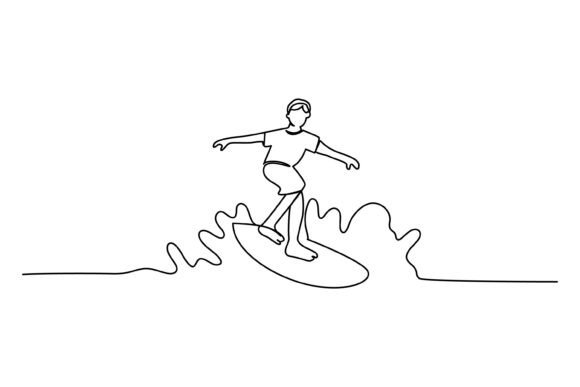
As a designer who has spent countless hours digitizing and testing machine embroidery design files, I have learned that simplicity is often the hardest quality to achieve. When I first opened the Continuous Line Design of a Man, my immediate reaction was one of relief. In a market saturated with overly complex, dense patterns that eat up thread and time, this piece stands out for its restraint. It is not just a graphic; it is a thoughtful composition of single-line decorative elements drawn on a white background, offering a clean aesthetic that translates surprisingly well into thread.
The core appeal here lies in the fluidity. The subject—a man surfing—is rendered without breaks, creating a sense of motion that static images rarely capture. For those of us running a craft business or managing an Etsy seller storefront, this kind of visual storytelling is gold. It suggests activity, freedom, and balance, all qualities that resonate deeply with customers looking for personalized gift items or unique custom apparel.
Real-World Application: The Tote Bag Test
To truly evaluate any embroidery file, you must move beyond the screen and imagine the needle hitting the fabric. I recently considered this design for a custom order involving canvas tote bags. The client wanted something modern, gender-neutral, and quick to produce. The Continuous Line Design of a Man fit this brief perfectly. Because the design relies on a continuous line, it likely utilizes a high proportion of running stitch or light satin work, rather than heavy fill stitch areas. This is crucial for tote bags, which are often made from sturdy but potentially stiff cotton or canvas.
When stitching on textured fabrics like canvas, dense designs can cause puckering or distortion. However, the open nature of this illustration allows the fabric’s natural texture to show through, creating a harmonious blend between the material and the art. The result was a finished product that looked professional and intentional, not like a heavy patch slapped onto a bag. It elevated the perceived value of the handmade product without adding excessive production time.
Versatility Across Product Lines
Beyond tote bags, this design demonstrates remarkable versatility. For sweatshirt embroidery, the linear style works beautifully on the chest pocket area or as a small left-chest logo. It avoids the bulk that can make garments uncomfortable to wear. If you are creating baby embroidery items, such as a onesie or a nursery wall hanging, the gentle curves and lack of sharp, aggressive details make it safe and visually soothing. It fits seamlessly into categories of Illustrations and Graphics that prioritize minimalism.
For holiday embroidery projects, such as summer-themed gifts or father’s day presents, the surfing theme is immediately recognizable. It serves as an excellent embroidered patch design if you plan to applique it onto denim jackets or caps. The single-line approach means fewer color changes, which is a significant advantage for small batch production. Whether you are making a tote bag design for a beach shop or a digital embroidery file for other makers to use, the adaptability is evident.
Navigating Technical Challenges
While the design is elegant, it requires careful handling during the digitizing and stitching phases. Since the product description notes that you will receive EPS, SVG, and JPG formats, it is important to clarify that these are vector and raster graphics, not necessarily native machine embroidery files like PES or DST. As an experienced reviewer, I must advise that you will need to digitize this artwork yourself or use software to convert it, ensuring you control the stitch density and pathing.
When converting this design assets into a stitch file, pay close attention to the corners. Continuous lines can sometimes create tight turns that may cause thread breaks if the needle penetrates the same hole repeatedly. Adjust your pull compensation and ensure your stabilizer is appropriate for your fabric choice. For stretchy fabrics, a cut-away stabilizer is non-negotiable to prevent distortion. For woven fabrics like tea towels or aprons, a tear-away might suffice, but always test on scrap fabric first.
Another consideration is contrast. On dark fabrics, a single thin line can get lost. You may need to increase the stitch width slightly or choose a high-contrast thread colors scheme, such as bright white or metallic gold, to ensure the surfing figure remains visible. On light fabrics, subtle tones can create a sophisticated, understated look that appeals to boutique buyers.
Enhancing Brand Value and Customer Trust
Using high-quality, distinct imagery like the Continuous Line Design of a Man contributes significantly to brand consistency. Customers associate clean, well-executed designs with professionalism. When they see a crisp, continuous line on a small shop product, it signals that the maker cares about detail. This builds trust and encourages repeat business. Furthermore, because the design is abstract yet recognizable, it allows for creative interpretation. You can pair it with text, place it within a circle, or use it as part of a larger collage, making it a flexible tool in your embroidery project toolkit.
For those selling printable mockup previews or digital products, this graphic offers a modern aesthetic that performs well in online listings. It photographs cleanly against white backgrounds, reducing the need for extensive photo editing. This efficiency is vital for commercial embroidery operations where time is money.
Final Practical Notes for Makers
Before committing to a large run, always verify the licensing terms associated with the EPS and SVG files. While the design is provided for use, confirming whether it allows for commercial sale of finished physical items is a critical step for any creative entrepreneur. Additionally, check the resolution of the JPG if you plan to use it for sublimation or printing alongside embroidery.
Test the design on various hoop size constraints. While the continuous line is scalable, ensure that at smaller sizes, the details do not merge into a blob. A 4x4 hoop might be ideal for hats, while a 5x7 could work better for towels. Inspect small details closely after the test stitch. If the line feels too thin, adjust your stitch length or width in your digitizing software.
In conclusion, the Continuous Line Design of a Man is a valuable addition to any designer’s library. It bridges the gap between artistic illustration and practical embroidery, offering a stylish, efficient, and versatile option for a wide range of custom apparel and home decor items. By respecting its technical needs and leveraging its aesthetic strengths, you can create products that stand out in a crowded marketplace.